






For the better part of the last three years, the semiconductor industry has been captivated by a single story: artificial intelligence.
The headlines have focused on GPUs, advanced packaging, high-bandwidth memory (HBM), hyperscale data centers, and the unprecedented investments being made by companies such as NVIDIA, Microsoft, Meta, Amazon, Google, and OpenAI. Every week seems to bring another announcement involving billions of dollars in AI infrastructure spending, another data center campus under construction, or another breakthrough in compute performance.
These developments deserve attention. They are reshaping the technology landscape.
But another story is unfolding beneath the surface, one that receives far less attention despite the potential to impact a much broader segment of the global economy. While the industry focuses on advanced AI chips, the foundation of the semiconductor ecosystem is quietly coming under increasing pressure.
That foundation is mature-node semiconductor capacity.
At Rand Technology, we believe this may be one of the most underappreciated supply chain risks facing manufacturers today.
As AI demand accelerates, automotive production rebounds, industrial markets strengthen, and electrification continues across multiple industries, the mature-node technologies that power these innovations are experiencing growing strain. Unlike leading-edge semiconductor capacity, which has attracted massive investment and public attention, mature-node production remains constrained, fragmented, and increasingly difficult to expand.
Rand Technology CEO Andrea Klein recently summarized the situation succinctly:
“Watch out… mature node capacity shrinking as usage is increasing. Defining risk to all, it’s not price, it’s availability.”
That distinction is important.
Many organizations continue to focus primarily on cost management and price volatility. Yet history has shown repeatedly that when supply chains tighten, availability, not pricing, becomes the defining challenge.
The question facing procurement and supply chain leaders today is not whether demand is growing.
It is a question of whether the industry’s underlying infrastructure can keep pace.
What Are Mature-Node Semiconductors?
When most people think about semiconductors, they imagine the latest processors manufactured on cutting-edge process technologies measured in single-digit nanometers.
These advanced nodes are certainly important. They power AI accelerators, high-performance computing platforms, and next-generation consumer devices.
However, much of the world’s electronics ecosystem runs on significantly older manufacturing technologies.
These so-called mature nodes include manufacturing processes commonly associated with analog devices, power management ICs (PMICs), microcontrollers, sensors, MOSFETs, voltage regulators, and numerous mixed-signal components.
These technologies are found virtually everywhere:
- Automotive electronics
- Industrial automation systems
- Medical devices
- Telecommunications infrastructure
- Networking equipment
- Aerospace and defense systems
- Renewable energy systems
- Consumer electronics
- Data center power architectures
In many cases, these components are every bit as critical as advanced processors.
A modern vehicle may contain thousands of semiconductors, many of which are produced on mature nodes. Industrial automation systems rely heavily on analog and power management devices. Renewable energy infrastructure depends on sophisticated power conversion technologies. Even the most advanced AI server cannot function without extensive supporting analog and power management components.
Yet despite their importance, mature-node technologies rarely generate the same attention as advanced AI processors.
That may be changing.
The AI Story Is Bigger Than GPUs
Much of today’s AI narrative revolves around compute.
NVIDIA’s growth has been extraordinary. Meta expects capital expenditures of approximately $145 billion as it expands its AI infrastructure. Anthropic has reportedly committed to paying SpaceX approximately $1.25 billion per month for compute capacity through 2029. Meanwhile, the largest hyperscalers are projected to account for more than 60% of global demand for Nvidia’s rack-scale AI servers in 2026.
These numbers are staggering. But they only tell part of the story. Every AI server requires far more than a GPU.
It requires:
- Power management devices
- Voltage regulators
- Capacitors
- Connectors
- Printed circuit boards
- Substrates
- Networking silicon
- Thermal management systems
- Analog control devices
As AI infrastructure expands, demand across the entire supporting ecosystem increases. This is creating what Rand often refers to as “collateral demand.” The industry tends to focus on the most visible component of a technology trend. Yet supporting technologies frequently experience equal or greater pressure because they serve multiple markets simultaneously.
The same PMICs, analog devices, MOSFETs, and board-level components supporting AI infrastructure may also be used in electric vehicles, industrial robotics, telecommunications systems, and renewable energy applications. As AI demand expands, it competes directly for capacity that was never intended to serve only AI. That dynamic is becoming increasingly important.
Capacity Is Shrinking While Demand Is Growing
One of the more concerning developments highlighted in recent market intelligence is the growing imbalance between mature-node supply and demand.
According to DigiTimes, 8-inch foundry supply is expected to decline slightly year over year in 2026, even as demand from AI servers, edge AI applications, and electric vehicles continues to accelerate.
This matters because many mature-node products continue to rely heavily on 8-inch manufacturing. Unlike advanced-node capacity, where billions of dollars are being invested into new fabs and packaging facilities, mature-node expansion has been comparatively limited.
In some cases, older fabrication facilities have been retired, repurposed, or operated with minimal expansion for years. The result is a growing mismatch. Demand is rising across multiple industries simultaneously.
Capacity is not.
This is precisely the type of environment that can produce availability challenges long before shortages become obvious. Historically, semiconductor shortages rarely begin with headline-grabbing disruptions.
They often start with:
- Slight lead time extensions
- Incremental price increases
- Buffer inventory requests
- Forecast extensions
- Rising bookings-to-billings ratios
Over time, these seemingly minor changes compound. Organizations that recognize them early gain flexibility. Organizations that ignore them often find themselves reacting rather than planning.
Why Automotive Demand Matters
One of the most significant developments occurring today is the return of automotive demand as a meaningful driver of semiconductor consumption. For much of the post-pandemic period, automotive manufacturers focused on rebuilding stability after experiencing severe shortages.
Today, however, demand patterns are shifting again. Edgewater reports strong automotive-related performance from suppliers such as Analog Devices, which cited strength in automotive and communications markets while forecasting continued growth. At the same time, electric vehicle production continues expanding globally.
Companies including Nio, Stellantis, Chery, Nissan, and others are pursuing aggressive growth initiatives, new market entries, and expanded production strategies. The challenge is that modern vehicles are increasingly semiconductor-intensive. Electric vehicles require significantly more electronics content than traditional internal combustion vehicles: battery management systems, onboard chargers, power conversion systems, ADAS platforms, connectivity modules, and thermal management systems. All of these rely heavily on mature-node analog and power technologies.
As automotive demand strengthens and AI infrastructure expands, both industries begin competing for many of the same underlying resources. This is not theoretical. It is already happening.
Industrial Markets Are Adding Pressure
Automotive is only one part of the equation. Industrial demand is strengthening as well. Recent market commentary points to improving activity across automation, energy infrastructure, and industrial electronics markets. At the same time, emerging technologies such as humanoid robotics are introducing entirely new demand vectors.
McKinsey recently estimated that the humanoid robotics market could reach $350-$400 billion by 2040 if adoption barriers are overcome. Meanwhile, Hyundai Mobis has already announced initiatives supporting large-scale robotics deployment, including agreements with Boston Dynamics and plans involving tens of thousands of robotic units. Every one of these systems requires semiconductors. Many require mature-node semiconductors.
As industrial automation expands alongside AI, automotive, and renewable energy investments, demand pressure becomes increasingly broad-based. This is an important distinction.
Shortages are easier to resolve when they originate from a single market.
They become far more difficult when multiple industries simultaneously pursue the same resources.
The Warning Signs Are Already Emerging
The market is providing several signals that deserve attention. Texas Instruments is reportedly implementing price increases of 15% to 25% across a broad range of products while encouraging customers to build a 4-to 8-week buffer inventory. NXP and STMicro are reportedly pursuing similar actions.
Meanwhile, MLCC pricing declines have nearly disappeared as AI-related demand consumes more capacity. NVIDIA’s Rubin architecture is expected to nearly double MLCC content compared to previous generations.
ASML’s CEO recently warned of persistent semiconductor supply tightness driven by AI and other emerging technologies, suggesting the overall semiconductor market could reach $1.5 trillion by 2030.
None of these developments, taken individually, guarantees shortages. Together, however, they paint a consistent picture. Demand is expanding. Capacity remains constrained. Customer behavior is becoming increasingly defensive.
Those are conditions procurement professionals should monitor carefully.
Why Availability Matters More Than Price
One of the most common mistakes organizations make during tightening markets is focusing too heavily on pricing. Price matters. But availability matters more.
A component that costs 10% more but arrives on time is often far less expensive than a component that cannot be sourced at all.
Production delays, missed customer commitments, revenue disruptions, expedited logistics, and line stoppages; the financial impact of unavailable material frequently exceeds the cost of higher pricing.
As Andrea stated, “It’s not price, it’s availability.”
Procurement organizations that understand this distinction often approach market cycles differently. Rather than focusing exclusively on lowest-cost sourcing, they emphasize:
- Supply assurance
- Strategic inventory
- Alternative sourcing pathways
- Supplier diversification
- Engineering flexibility
- Long-term planning
These capabilities become increasingly valuable as markets tighten.
What Smart Organizations Are Doing Now
The most successful companies are not waiting for shortages to become obvious. They are acting before conditions deteriorate. Across the industry, leading organizations are:
Extending Forecast Horizons: Longer-term visibility allows suppliers to allocate capacity more effectively and reduces surprises.
Reviewing AVL Strategies: Organizations with greater sourcing flexibility are often better positioned during supply disruptions.
Evaluating Critical Component Exposure: Many companies have not fully assessed their dependence on mature-node technologies.
Building Strategic Inventory: Not every component requires buffering, but critical technologies may justify additional protection.
Strengthening Supplier Relationships: Strategic partnerships often create advantages that transactional purchasing cannot.
Investing in Market Intelligence: Understanding demand trends before they impact availability can significantly improve planning outcomes.
These actions are not reactions. They are proactive measures designed to reduce risk before disruption occurs.
The Role of Independent Distribution
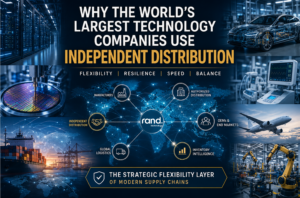
Periods of market transition often highlight the value of flexibility. Independent distributors play a unique role because they operate across multiple regions, industries, suppliers, and inventory channels. At Rand Technology, our focus extends beyond simply locating components.
We help customers understand market dynamics, evaluate risk, identify alternative sourcing strategies, and build resilient supply chain plans. This becomes particularly important when availability, rather than pricing, is the primary challenge.
Our global sourcing capabilities, engineering expertise, quality processes, and market intelligence allow customers to make more informed decisions before shortages impact operations. As the market evolves, this consultative approach becomes increasingly valuable.
Looking Ahead
The semiconductor industry is entering a fascinating period. AI investment remains extraordinarily strong. Automotive demand is growing. Industrial automation continues to advance. Electrification is accelerating. Robotics is emerging. Data centers are expanding. All of these trends are positive. But they also place increasing pressure on a mature-node ecosystem that has received comparatively little attention. That ecosystem powers much of the modern world. And today, it may represent one of the industry’s most significant blind spots.
The risk is not necessarily an immediate crisis. The risk is complacency. Organizations that assume mature-node capacity will always be available may find themselves surprised by tightening conditions. Organizations that recognize the trend early can position themselves accordingly.
Because, as history has repeatedly shown, by the time a shortage becomes obvious, the opportunity to prepare has often already passed.
The semiconductor industry’s future will not be determined solely by advanced AI processors and cutting-edge manufacturing nodes. It will also depend on the mature-node technologies quietly enabling everything from vehicles and factories to telecommunications networks and AI infrastructure itself.
Today, those foundational technologies are facing a growing imbalance between supply and demand. Mature-node capacity is tightening. Usage is increasing. AI is accelerating demand across adjacent markets. And procurement behavior is beginning to shift in response. As we at Rand have observed, the defining risk may not be price. It may be availability.
For supply chain leaders, that is a message worth paying close attention to.